Threats don’t clock out at 5pm—and neither should your security. Managed Detection & Response (MDR) backed by a 24×7 SOC helps you detect, contain, and investigate threats in real time, while delivering audit-ready reporting for modern compliance and insurance demands. If you’re modernizing security, pair MDR with Threat Detection (MDR) and strategic guidance via Cybersecurity & vCISO services.
Updated January 20, 2026
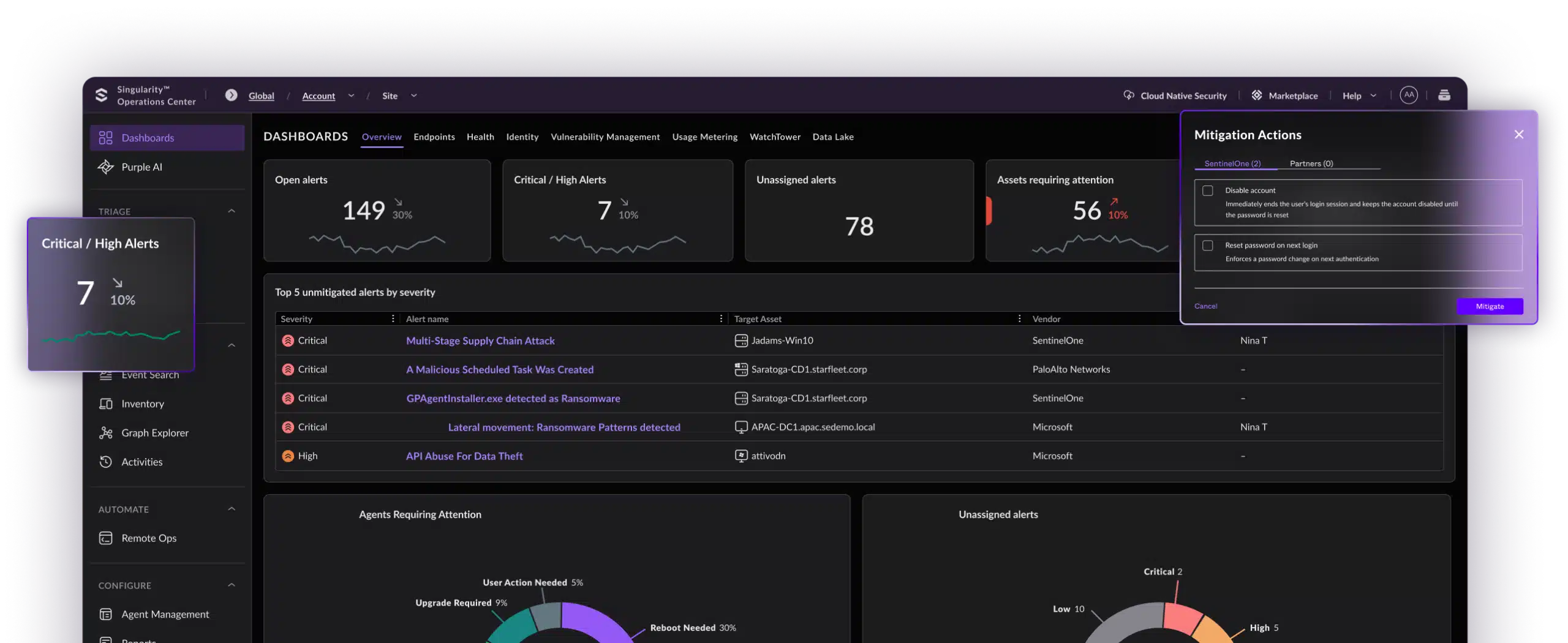
The cyber threat landscape changed—and businesses are paying the price
The cyber threat landscape has evolved—fast. With ransomware attacks rising and regulatory bodies tightening enforcement, businesses can no longer afford a passive, reactive approach to security.
That’s why more organizations are adopting Managed Detection and Response (MDR) backed by a 24×7 Security Operations Center (SOC)— a proactive, real-time cybersecurity service that combines expert human analysts, AI-driven threat detection, and around-the-clock monitoring to detect, respond to, and contain threats before they escalate.
MDR + 24×7 SOC isn’t just a “security upgrade.” It’s a business requirement for risk, compliance, and cyber insurance in 2026.
What is MDR?
MDR is a managed security service that monitors your environment—endpoints, cloud, network, and users—24 hours a day, 7 days a week. In short: MDR combines people, process, and technology to keep your business safe while your team sleeps. It usually sits on top of tools like EDR and a SIEM.
What MDR delivers
- Continuous threat monitoring and alerting across endpoints, cloud, and network signals
- Human-led investigation and validation to separate real threats from noise
- Real-time response and containment to stop lateral movement and damage
- Root cause analysis and prioritized remediation guidance
- Audit-ready documentation and reporting for compliance and insurance requirements
If you’re building a complete security program (not just tools), MDR often sits alongside governance and leadership guidance through vCISO services.
Why MDR matters more than ever
1) Cyber insurance requirements have changed
If you’re applying for or renewing cyber insurance, carriers increasingly expect:
- 24×7 threat monitoring
- Endpoint Detection & Response (EDR)
- Incident response planning and log retention
- Rapid isolation capability in case of compromise
Without continuous monitoring, businesses can face higher premiums, policy exclusions and harder claims.
2) Compliance standards are getting tougher
Regulations and standards (HIPAA, PCI-DSS, SOX, GLBA, GDPR and more) increasingly require documented efforts to detect and respond to threats. MDR provides reporting and evidence to support audit readiness.
If compliance and resilience are top priorities, connect MDR to a broader program that includes policy, controls, and evidence workflows: Compliance, Risk & Ransomware Protection.
3) You can’t respond to what you can’t see
The average time to detect a breach is still measured in weeks or months, not minutes. According to IBM’s summary of its Cost of a Data Breach 2026 report, it takes an average of 247 days to identify and contain a breach. MDR shortens detection and response so attackers can be stopped before they encrypt, exfiltrate or escalate.
What would it cost to build a 24×7 SOC in-house?
Standing up an internal 24×7 SOC is expensive and difficult to sustain. Here’s the reality for many organizations:
- 3 Security Analysts (24×7 shifts) — $300,000+ annually
- SOC Manager — $130,000 annually
- SIEM/EDR Software Licenses — $75,000–$150,000 annually
- Hardware + Infrastructure — $50,000+ annually
- Training & Turnover — $15,000+ annually
Total: roughly $570,000+ per year, before staffing gaps, burnout and tool tuning. These are rough planning estimates, not quotes; salaries and licensing vary widely by region and vendor.
Who needs MDR?
You don’t have to be a Fortune 500 company to need enterprise-grade cybersecurity. MDR is increasingly essential for:
- Healthcare (HIPAA compliance, protection of patient data)
- Finance & Insurance (PCI-DSS, SOX, GLBA, risk mitigation)
- Manufacturing & Defense (CMMC / NIST 800-171, IP protection)
- Legal & Professional Services (client confidentiality, breach prevention)
- Education (FERPA, ransomware protection)
- Mid-Market businesses (cyber insurance approval or renewal requirements)
Want to see how security requirements differ by industry? Explore Industries Served.
The bottom line
MDR with 24×7 SOC is no longer a luxury—it’s a business requirement. It helps you meet insurance and regulatory standards, respond to threats in real time, and protect your most valuable assets: your data, your operations, and your reputation.
Want to see if MDR + 24×7 SOC makes sense for your business?
HTG delivers managed detection and response backed by SOC analysts, so you get monitoring, investigation and containment without building a SOC internally. Coverage hours are set by the service agreement you choose. Start with Threat Detection (MDR), align strategy with Cybersecurity & vCISO services, and strengthen resilience with Compliance, Risk & Ransomware Protection.
Talk to HTG Explore Threat Detection (MDR) Explore Cybersecurity & vCISOFAQ: MDR + 24×7 SOC
What’s the difference between MDR and a traditional MSP security add-on?
MDR is purpose-built for continuous threat detection and response with a dedicated SOC, validated investigations, and active containment. Traditional add-ons are often alert-only or business-hours monitoring. MDR is designed to stop threats fast—especially ransomware.
Does MDR help with cyber insurance approval or renewal?
Yes. Many cyber insurance carriers expect 24×7 monitoring, EDR, incident response planning, and rapid isolation capability. MDR supports these expectations and provides documentation that can help during underwriting and claims.
How does MDR support compliance?
MDR provides monitoring, detection, response, and evidence through reporting—supporting audit readiness for frameworks and regulations like HIPAA, PCI-DSS, SOX, GLBA, and GDPR. For a broader risk program, see Compliance, Risk & Ransomware Protection.
What environments does MDR monitor?
MDR commonly monitors endpoints (laptops, servers), cloud activity, identity/authentication signals, and network telemetry—then correlates events to detect suspicious behavior and respond quickly.
How quickly can MDR contain a threat?
With 24×7 SOC monitoring and active response workflows, MDR can often validate and contain threats in minutes or hours—significantly reducing attacker dwell time and limiting damage. How fast containment happens in practice also depends on what your provider is allowed to do without calling you first, which we cover in The 29-Minute Problem.