Firewalls and basic antivirus can’t keep up with continuous threats on their own. Pairing EDR (endpoint detection and response) with a SIEM (security information and event management), backed by a managed SOC or MDR service, gives you the visibility, speed and reporting most businesses now need for compliance and cyber insurance.
Updated January 20, 2026
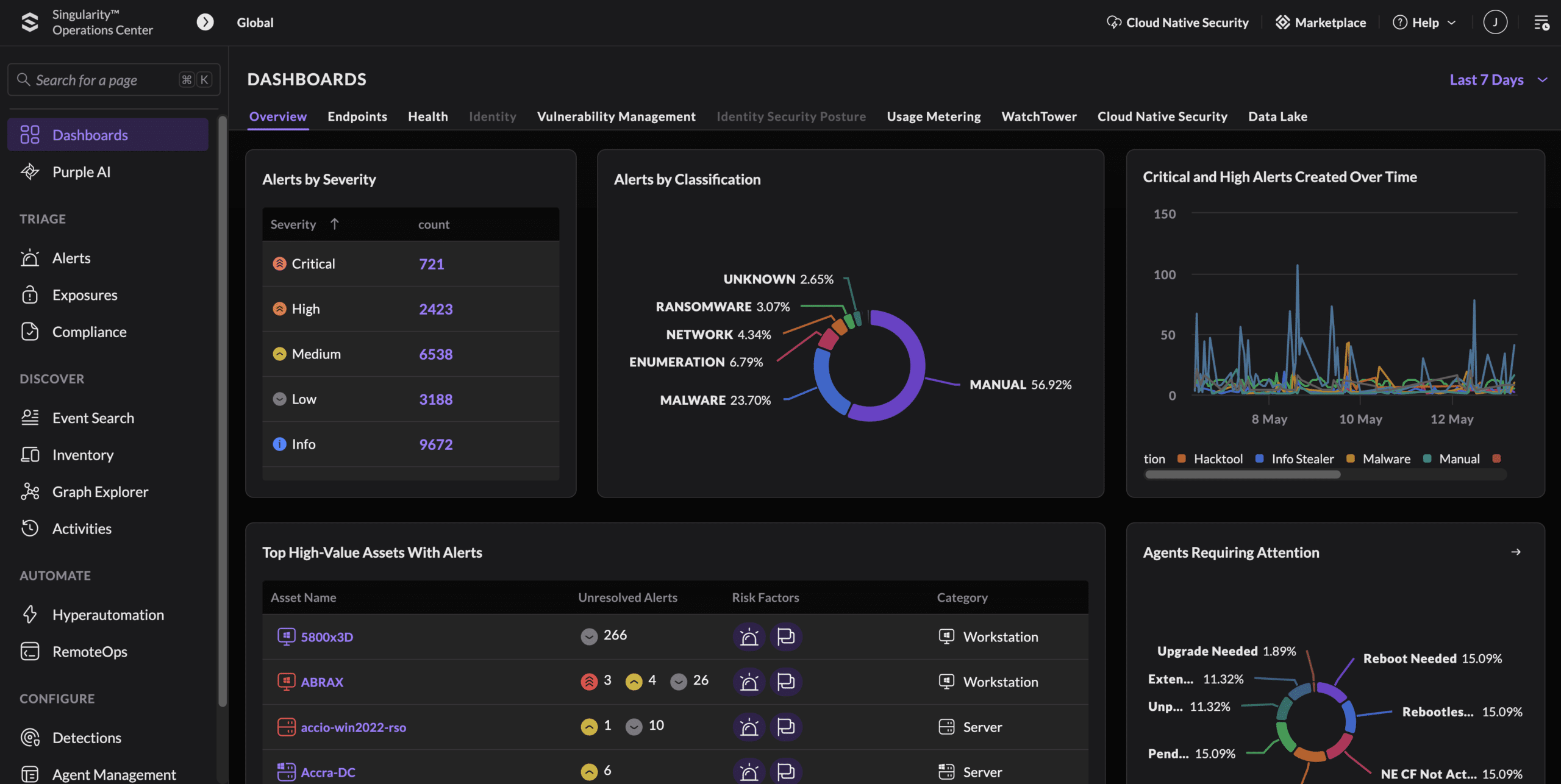
Security threats aren’t isolated anymore—they’re continuous
Security threats aren’t isolated incidents anymore. They’re continuous, often sophisticated and frequently go unnoticed until it’s too late. Businesses relying only on a firewall and unmanaged antivirus are fighting uphill.
To stay ahead of threats and meet modern compliance and insurance demands, organizations need a proactive, intelligent, and integrated approach to cybersecurity. That’s where EDR and SIEM come together—best supported by a managed security operations model like Threat Detection & MDR.
Tools don’t win incidents—visibility + correlation + fast response does.
What are EDR and SIEM?
EDR: Endpoint Detection & Response
EDR continuously monitors endpoints (laptops, desktops, and servers) for suspicious activity. It provides:
- Real-time visibility into endpoint behavior
- Automated threat detection and isolation to stop spread fast
- Incident forensics and response support for root cause analysis
SIEM: Security Information & Event Management
SIEM aggregates and correlates data from across your IT environment—servers, firewalls, applications, identity systems, and cloud platforms—and:
- Centralizes log collection and event monitoring
- Identifies anomalies and advanced attack patterns
- Supports compliance and audit reporting with a single evidence trail
For what to collect and how long to keep it, NIST’s Guide to Computer Security Log Management (SP 800-92) is a useful starting point.
Used together, EDR and SIEM provide full-spectrum visibility and control—from endpoints at the edge to your environment’s core. For organizations aligning strategy, policy, and risk, pair this approach with Cybersecurity & vCISO services.
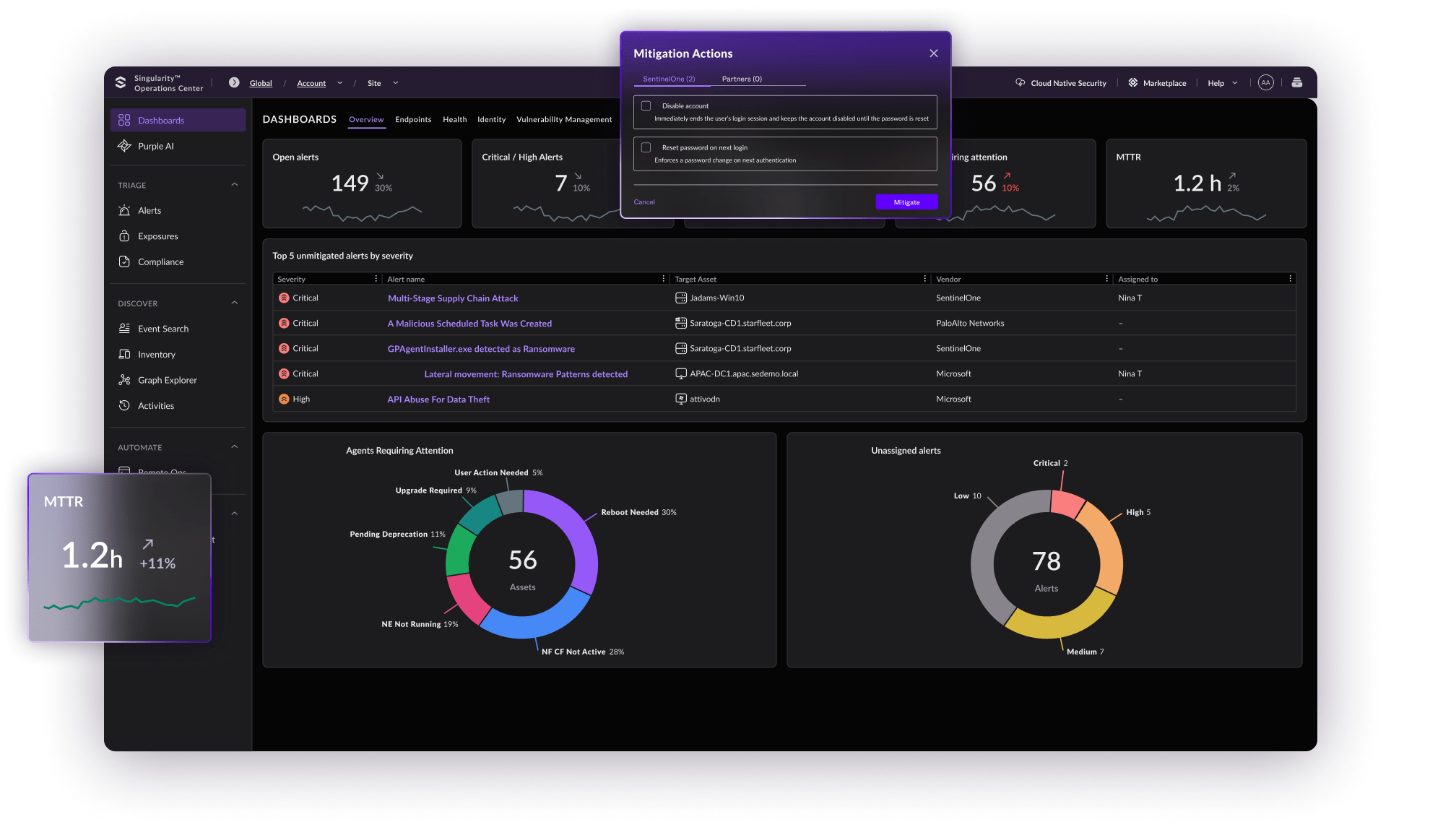
How SIEM + EDR work together
- EDR detects suspicious endpoint behavior (ex: malware execution, suspicious scripts, unexpected persistence)
- SIEM correlates the activity with identity, network, cloud, and application telemetry
- If validated, alerts flow to the SOC and EDR can isolate devices automatically—stopping lateral movement
- Both provide investigation detail for remediation and reporting
EDR finds the signal on the endpoint. SIEM proves context across everything. Together, they accelerate containment.
Why pair EDR + SIEM with a managed SOC
Security tools are only as good as the people monitoring and tuning them. That’s why our approach includes a managed SOC model through Threat Detection & MDR, with monitoring delivered by approved SOC partners:
- Monitoring by security analysts, with coverage hours set by your service agreement
- Threat triage, incident response, and escalation
- Continuous tuning to reduce false positives and alert fatigue
How AI Ops helps with alert volume
Modern environments generate too much telemetry for humans alone. AI Ops helps by:
- Behavior modeling and anomaly detection
- Automated alert enrichment (context, priority, related activity)
- Faster, more consistent decisions with reduced human error
This becomes especially important in cloud, hybrid, and remote-work environments—where identity and access patterns change constantly. For broader risk reduction and evidence readiness, explore Compliance, Risk & Ransomware Protection.
The business benefits
Short-term gains
- Immediate threat visibility and faster containment
- Compliance-ready reporting (HIPAA, PCI-DSS, SOC 2, and more)
- Less noise and reduced alert fatigue for internal IT teams
Long-term value
- Security maturity and risk reduction over time
- Stronger cyber insurance posture and fewer policy exceptions
- A foundation that can adapt as compliance requirements and threats change
EDR + SIEM vs. traditional security stack
| Feature | Traditional firewall + AV | EDR + SIEM + Managed SOC |
|---|---|---|
| Coverage | Perimeter-focused | Full environment + endpoint visibility |
| Detection | Signature-based (known threats) | Behavioral, heuristic, and analytics-driven |
| Monitoring | Business hours (if any) | Analyst monitoring (hours per service agreement) |
| Response | Manual and slower | Automated isolation + expert response |
| Cost predictability | Higher CapEx + internal labor | Predictable monthly OpEx |
| Compliance support | Limited | Built-in audit trails and reporting |
Is your business ready?
If your current security setup relies on outdated, disconnected tools—now is the time to modernize. EDR + SIEM with a managed SOC gives your business the visibility, speed, and intelligence needed to stay ahead of today’s threats.
Whether you’re a growing mid-sized company or a multi-location enterprise, HTG delivers scalable, fully managed cybersecurity solutions that align with business goals and regulatory needs.
Secure more than just your network—secure your future.
Want pricing and a clear scope for EDR + SIEM + SOC?
HTG can help you modernize your security with Threat Detection & MDR, strategic oversight through Cybersecurity & vCISO, and a risk-first program via Compliance, Risk & Ransomware Protection.
Book a Security Call Explore Threat Detection (MDR / SOC) Explore Cybersecurity & vCISOFAQ: EDR + SIEM + Managed SOC
What’s the difference between EDR and SIEM?
EDR monitors endpoint behavior (laptops, desktops, servers) to detect and contain suspicious activity. SIEM centralizes logs and correlates events across your environment (cloud, identity, firewalls, apps) to identify patterns and prove context. Together, they improve visibility and speed.
Do we still need a firewall if we have EDR + SIEM?
Yes. Firewalls are still an important control, but they aren’t enough on their own. EDR and SIEM add behavioral detection, correlation across systems and response that perimeter tools can’t provide. Pairing them with SOC monitoring makes sure alerts get acted on.
How does a managed SOC reduce alert fatigue?
A managed SOC continuously tunes detection rules, suppresses false positives, enriches alerts with context, and escalates only what matters—so your internal IT team isn’t buried in noise. This is a core benefit of Threat Detection & MDR.
Does EDR + SIEM help with compliance and audits?
Yes. Centralized logging, correlation, and investigation detail create stronger audit trails and reporting for frameworks like HIPAA, PCI-DSS, and SOC 2. For a broader program, see Compliance, Risk & Ransomware Protection.
What types of businesses benefit most from EDR + SIEM + SOC?
Any organization with endpoints, cloud apps, remote users, or compliance obligations benefits—especially multi-location businesses and teams without 24/7 internal security coverage. HTG delivers this through MDR with partner SOC monitoring plus strategic oversight via vCISO services.